
Crawl Space Dehumidifier Installation in Richmond, VA
A dehumidifier is one of four ways Virginia's code lets you condition a sealed crawl space. If it is the one chosen, the state tells you exactly how much capacity it has to have.
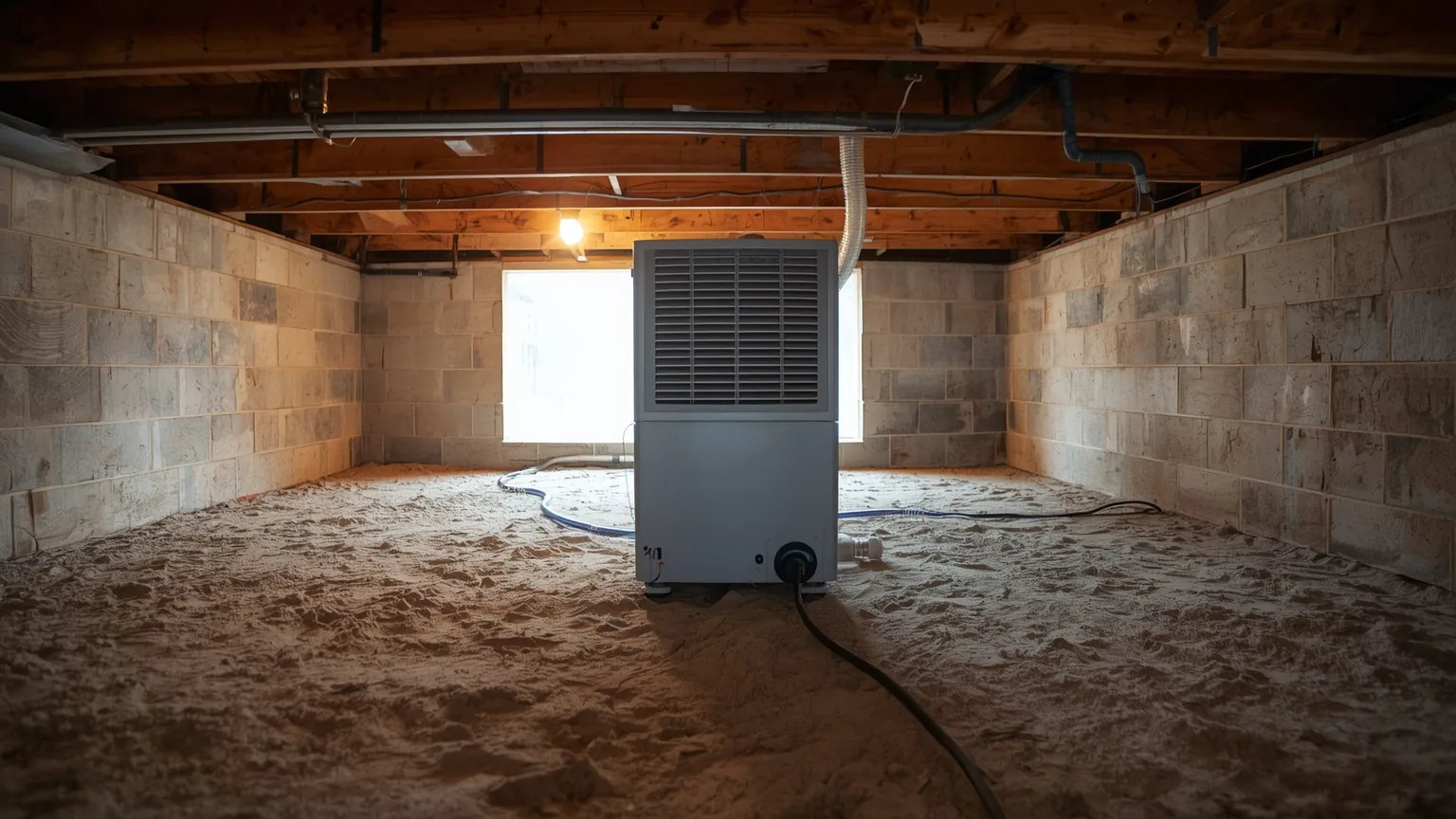
Who handles crawl space dehumidifiers in Richmond, VA?
Richmond Crawl Space Solutions arranges crawl space dehumidifier installation across Richmond and the surrounding counties. A dedicated crawl space unit is warranted where a space has been sealed and needs its humidity actively managed. Virginia's code sets a specific capacity for that method, and condensate has to have a permanent route out rather than a bucket someone remembers to empty. Call (804) 552-6898 to arrange an evaluation.
When a dehumidifier is the right call
A dehumidifier removes moisture from air. It is therefore the right tool for a sealed space whose remaining problem is humidity, and the wrong tool for almost everything else.
In a vented crawl space it is close to pointless — the unit dehumidifies the outdoors through your foundation vents, runs constantly and achieves very little. In a space with liquid water it treats a symptom while the source continues. The condition under which it earns its cost is a space that has been sealed, has no active water entry, and needs its humidity held down through a Virginia summer.
That is why it belongs in the conversation after sealing and after any water work, not instead of them.
The four accepted methods
Sealing a crawl space is only half of what R408.3 requires. The section also requires one of four conditioning methods for the space, and dehumidification is one of them.
- Continuously operated mechanical exhaust at 1 cubic foot per minute for each 50 square feet of crawl space floor area, with an air pathway to the common area and perimeter walls insulated.
- A conditioned air supply sized to deliver 1 cubic foot per minute for each 50 square feet of under-floor area, with a return air pathway and perimeter walls insulated.
- A plenum in existing structures where the under-floor space is used as a plenum, complying with the mechanical provisions.
- Dehumidification sized to the capacity Virginia specifies — the number is below, and it is not the same number the model code uses.
Condensate has to go somewhere permanently
A crawl space dehumidifier pulls water out of the air continuously through the humid months, and that water needs a designed route out: a gravity drain to a suitable point, or a condensate pump where gravity is not available. A unit draining into a reservoir that a person is expected to empty is not a crawl space solution, because nobody goes down there often enough.
Condensate lines are also a routine failure point. They block, they get knocked loose, and the first sign is often water on the liner. Where a pump is involved it is one more thing with a service life. Whatever the arrangement, it should be inspectable without dismantling anything.
Living with one
These units run for years in an environment nobody visits. Filters need cleaning, coils collect dust, and the drain needs checking. A humidistat that has drifted or a unit that has quietly stopped can go unnoticed for a whole season, by which time the space has been running at summer humidity throughout.
The practical answer is a humidity readout that can be seen without crawling underneath, and a reminder to actually look at it. It is a modest detail that determines whether the equipment does its job for a decade or fails silently in year three.
Virginia writes a number where the model code does not
This is the single most checkable thing on this site. The 2021 International Residential Code, which most states adopt more or less as written, requires only that dehumidification be "sized in accordance with manufacturer's specifications" — a clause that can be satisfied by almost any unit somebody is willing to install.
Virginia replaced it. Item 58 of 13VAC5-63-210 changes Item 2.4 of Section R408.3 to read: dehumidification sized to provide 70 pints (33 liters) of moisture removal per day for every 1,000 square feet (93 square meters) of crawl space floor area. That is a hard capacity figure, and it applies where dehumidification is the method used to condition a sealed crawl space.
The arithmetic is easy enough to do on the back of a quote. A 1,200 square foot crawl space calls for at least 84 pints per day; 2,000 square feet calls for at least 140. If a proposal seals your crawl space and specifies a unit well under that, the question to ask is which of the four accepted methods the design is actually relying on — because if the answer is dehumidification, the capacity is not a matter of opinion.
Crawl Space Dehumidifiers questions
What size dehumidifier does a crawl space need in Virginia?
Where dehumidification is the chosen conditioning method for a sealed crawl space, Virginia's amended code specifies 70 pints of moisture removal per day for every 1,000 square feet of crawl space floor area. A 1,500 square foot space therefore points to at least 105 pints per day. The model code most states use gives no figure at all.
Do I need a dehumidifier if my crawl space is encapsulated?
You need one of four accepted conditioning methods, and dehumidification is one of them. Mechanical exhaust, a conditioned air supply or a plenum arrangement are the others. What matters is that your scope specifies one of the four rather than sealing the space and stopping.
Can I use a regular household dehumidifier?
It is generally a poor fit. Consumer units are built for conditioned rooms, not for a cool damp space nobody visits, they usually rely on a reservoir rather than a permanent drain, and they tend to lose efficiency at crawl space temperatures. Dedicated units are built for those conditions and for continuous unattended running.
Where does the water go?
To a designed drain point by gravity, or to a condensate pump where gravity will not do it. Never to a reservoir requiring manual emptying, since nothing under a floor gets emptied reliably. The drain route should be inspectable without dismantling anything.
Will a dehumidifier work in a vented crawl space?
Not usefully. With open vents the unit is attempting to dehumidify outdoor air, so it runs continuously, costs money to operate and achieves very little. Sealing comes first, then conditioning the sealed space.
Related crawl space services
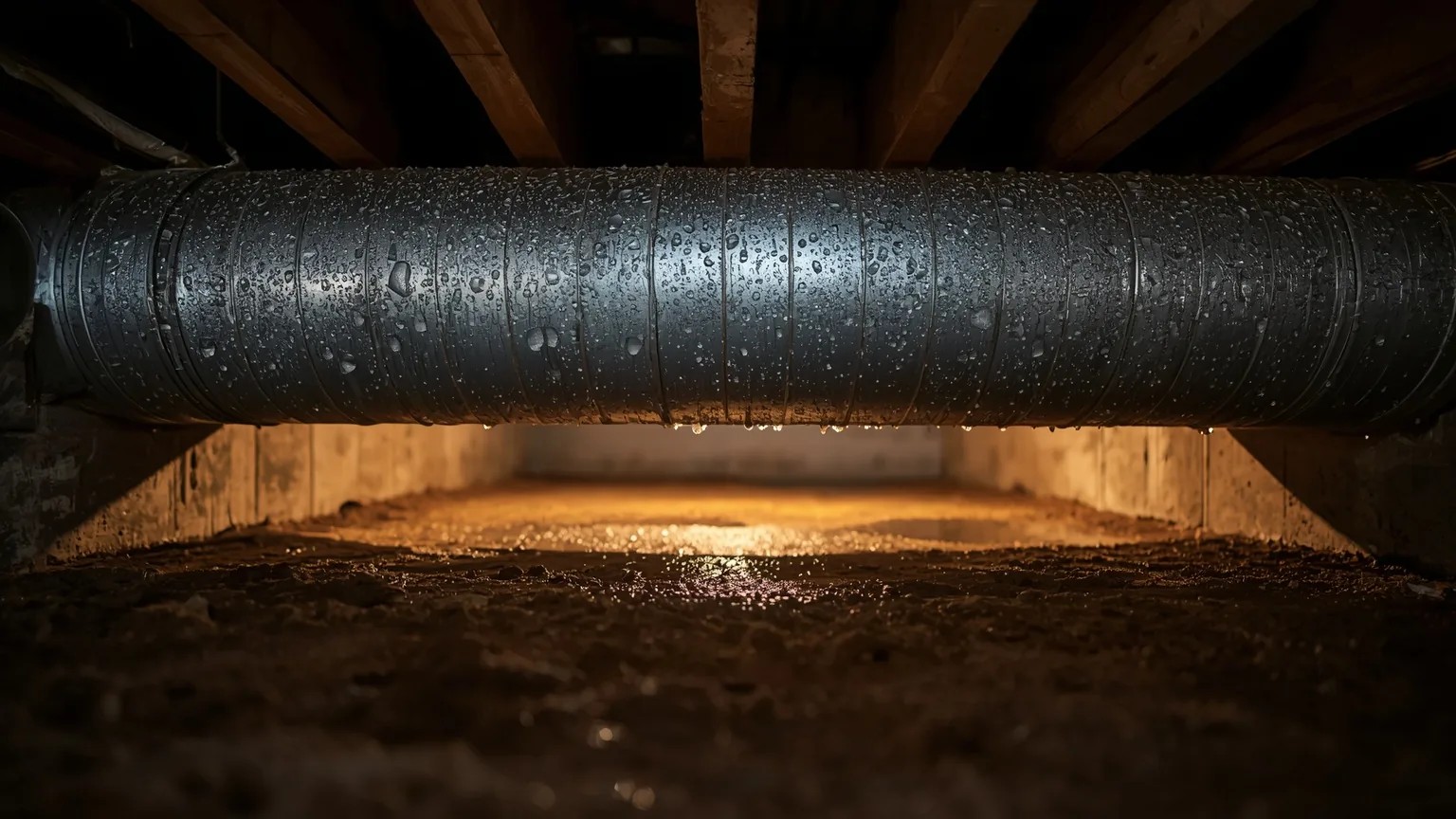
Crawl Space Moisture Control
Identifying the source before choosing the remedy.
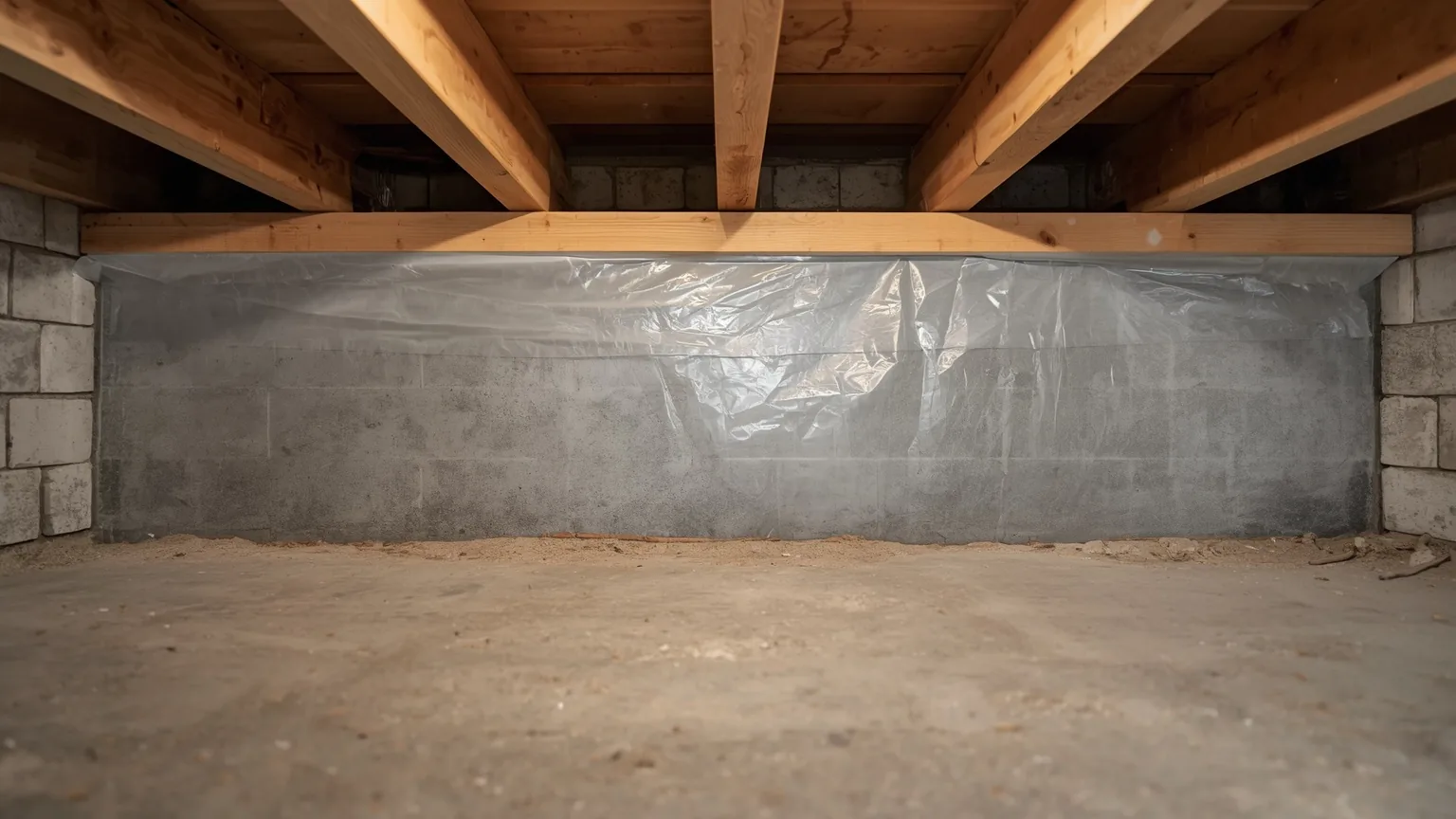
Crawl Space Encapsulation
The full sealed system — liner, closed vents and managed humidity.
Crawl Space Encapsulation Cost
The variables behind the spread — and why one number cannot be honest.
Vapor Barrier Installation
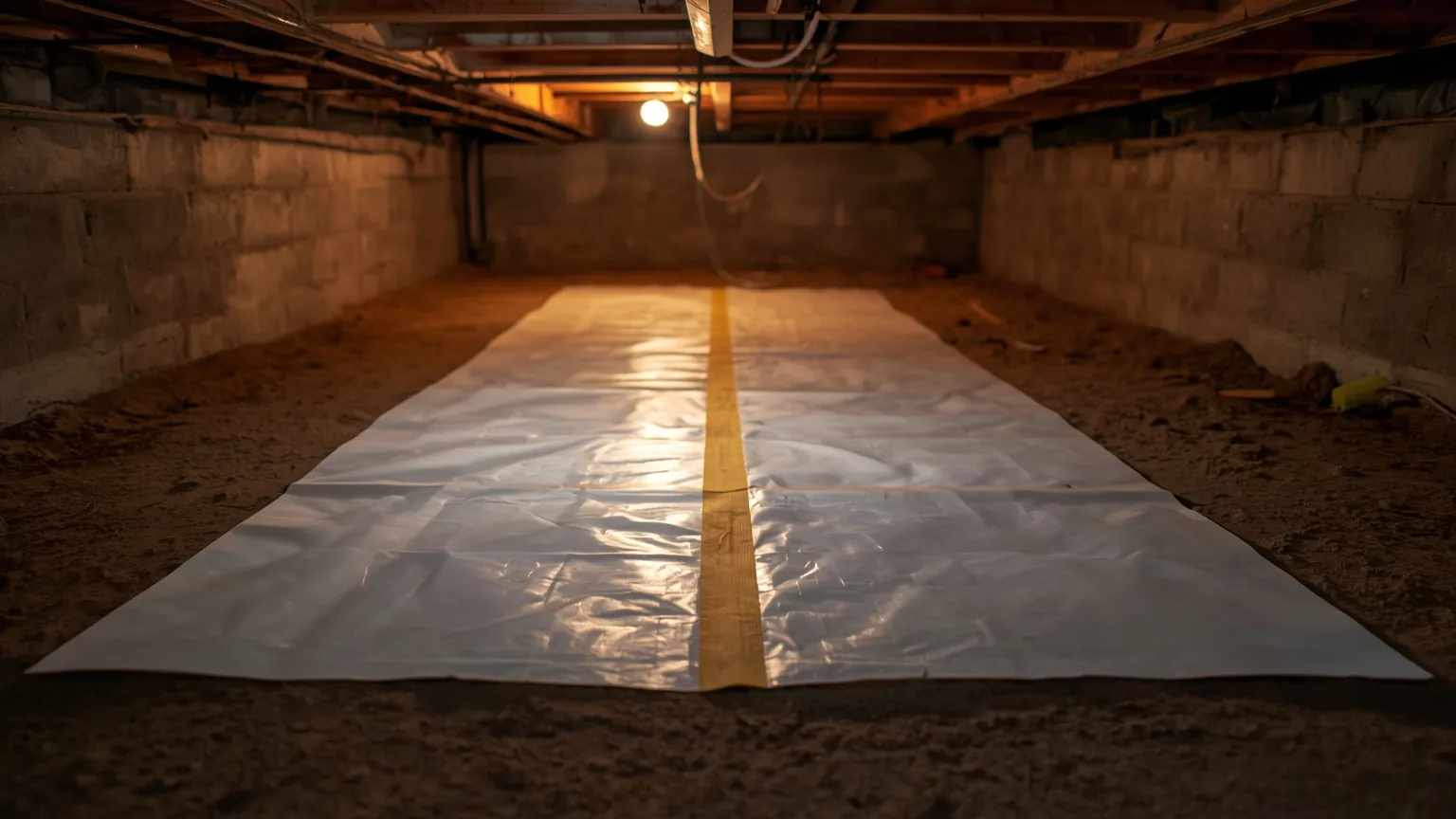
Ground cover that stops soil moisture — and where its limits are.
Find out what is actually causing it.
An inspection underneath, readings taken on site, and a written scope ahead of any figure.