
The short answer is no, not until the water is dealt with. The longer answer explains why this particular mistake is so costly, and why it keeps happening.
Can you encapsulate a crawl space that gets water?
Not as a first step. Encapsulation addresses vapor and humid air; it does nothing about liquid water. Sealing a space with an active water source puts a liner over the water, holds it against the ground and foundation, and removes what evaporation was clearing. The problem becomes invisible rather than solved, which is worse than leaving it alone.
Why does sealing over water make things worse?
Three reasons, and they compound:
- The water stays in contact with the structure. Foundation walls and any framing near the floor remain wet, and decay needs only sustained moisture to continue.
- You lose the evaporation. An open crawl space at least sheds some water to the air. Sealed, that route closes.
- Nobody sees it. The liner hides the water, so the problem progresses unobserved until something upstairs gives.
A dehumidifier does not rescue this. It removes moisture from air, not from a puddle under a sheet of plastic.
What is the correct order of work?
- Find where the water comes from. Surface runoff, groundwater or plumbing — the timing usually tells you.
- Correct the cheap external causes first. Gutters, downspouts and grading resolve a large share of cases for a small fraction of the cost.
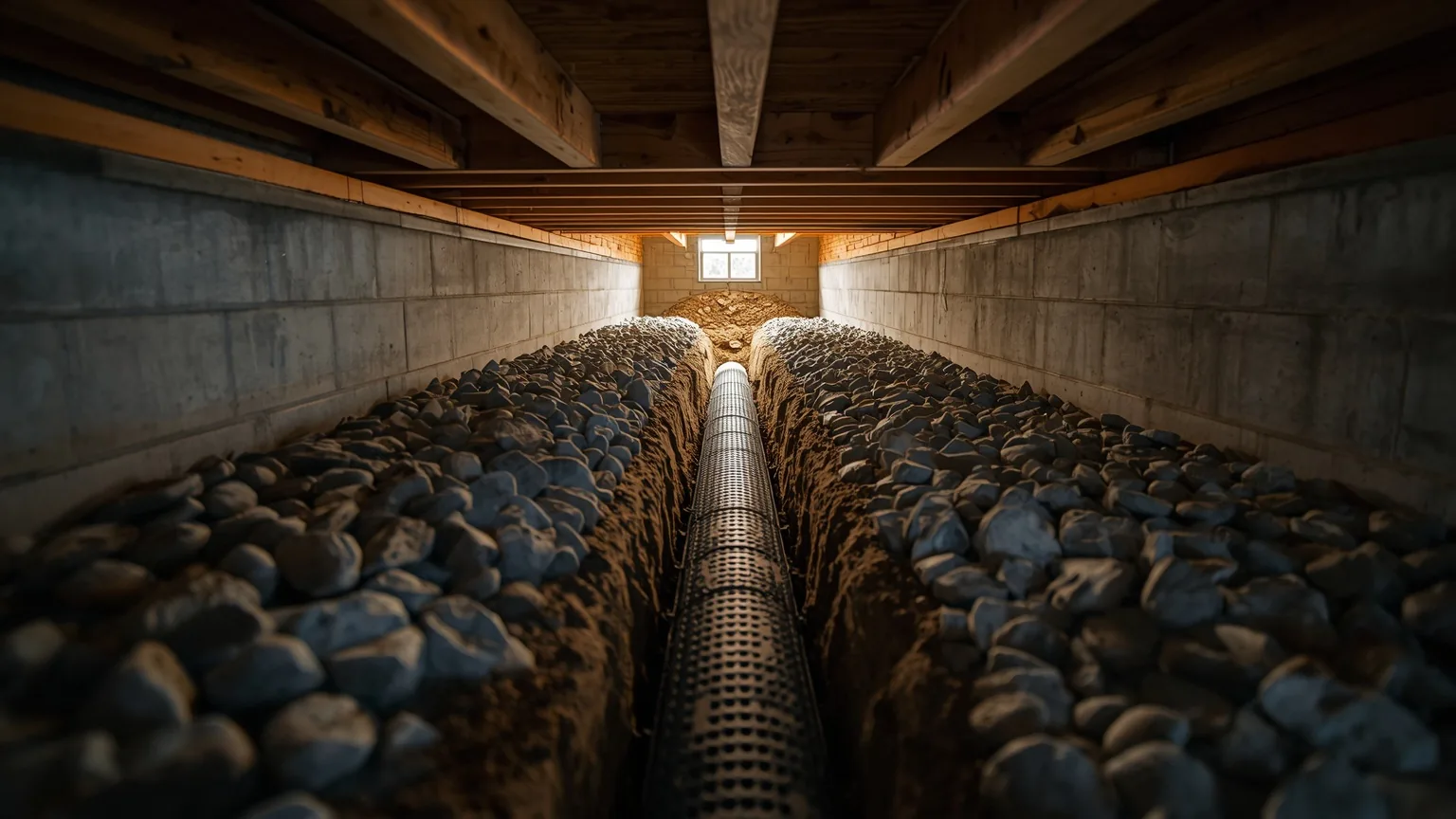
- Install interior drainage if water still arrives through the ground, ending at a sump where required.
- Repair what the water damaged, while the framing is still accessible.
- Then seal and condition.
Every step is cheaper and easier before the liner goes down. That is the practical argument, quite apart from the technical one.
Does the code have a view on this?
It does. R408.6 of the Virginia Residential Code provides that where there is evidence the groundwater table can rise to within 6 inches of the finished floor at the building perimeter, or that surface water does not readily drain from the site, the crawl space grade must be as high as the outside finished grade unless an approved drainage system is provided.
In other words, the code recognizes sites with a water problem and requires them to be dealt with structurally — not covered over. A drainage system is its named remedy.
What if a contractor says the liner will handle it?
Ask specifically what happens to the water that currently arrives. Not whether the liner is waterproof — it is — but where the water goes once the liner is over it. If there is no answer involving collection and removal, the proposal is to conceal it.
This is not necessarily bad faith. Encapsulation is what many firms sell, and a wet crawl space arrives looking like a job for it. But the question deserves a direct answer before you sign.
What if I cannot afford both at once?
Do the water work. A crawl space with drainage and no liner is in a stable, honest condition — damp, ventilated, and not deteriorating quickly. A crawl space with a liner over standing water is deteriorating out of sight while looking finished.
Staging is entirely reasonable, and any scope worth accepting should be written so it can be staged. Our waterproofing page covers what the first stage involves.